




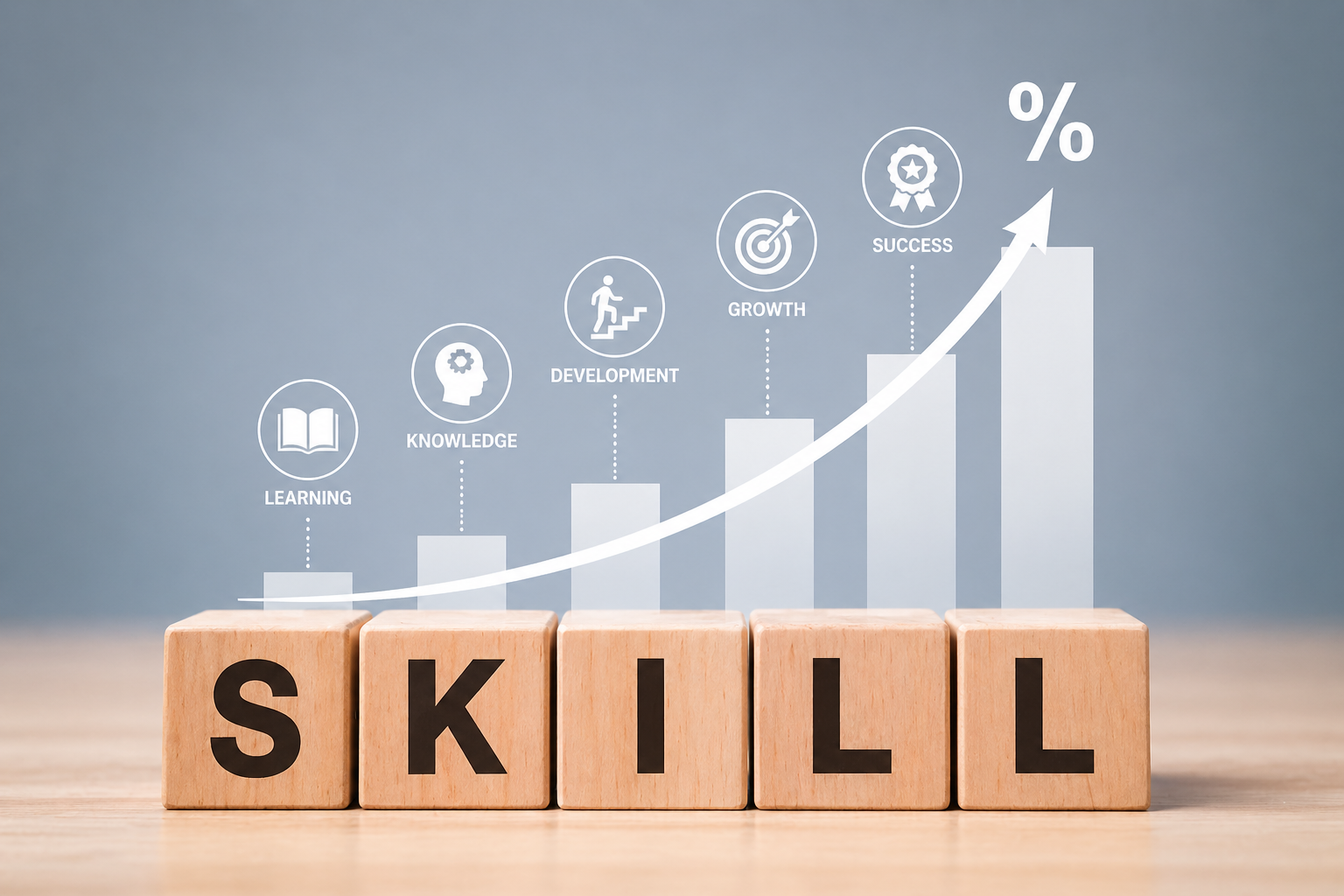
The workplace is evolving faster than ever. Rapid digital transformation, automation, and shifting business models are redefining how organizations operate. In this environment, one thing is clear: companies that invest in their people will outperform those that don’t.
In this context, upskilling, reskilling, and retaining employees have become essential strategies for building a resilient and future-ready workforce. As a result, organizations can no longer rely solely on hiring new talent to fill skill gaps; instead, they must develop the talent they already have.
Let’s explore how businesses can effectively upskill, reskill, and retain employees to stay competitive in the modern era.
Understanding Upskilling and Reskilling
While often used interchangeably, upskilling and reskilling serve different purposes:
- Upskilling focuses on enhancing existing skills so employees can perform better in their current roles.
- Reskilling involves training employees in entirely new skills to transition into different roles within the organization.
For example, a marketing professional learning advanced data analytics is upskilling, while a customer service agent transitioning into a digital marketing role is reskilling.
Both approaches are critical as businesses adapt to new technologies like AI, automation, and data-driven decision-making.
Why Upskilling and Reskilling Matter
1. Bridging the Skills Gap
The skills gap continues to widen as technology evolves. Many organizations struggle to find candidates with the right expertise. Upskilling and reskilling help bridge this gap internally, reducing dependency on external hiring.
2. Enhancing Employee Engagement
Employees are more engaged when they feel valued and see opportunities for growth. Learning programs signal that the organization is invested in their future.
3. Increasing Organizational Agility
A workforce that can adapt quickly to new tools and processes is essential for business continuity. Therefore, upskilled employees are better equipped to respond to change.
4. Reducing Hiring Costs
Recruitment is expensive and time-consuming. Training existing employees is often more cost-effective and leads to faster results.
The Role of Retention in Workforce Strategy
Upskilling and reskilling efforts only pay off if employees stay. Retention is the third pillar of a future-proof workforce.
High employee turnover leads to:
- Loss of institutional knowledge
- Increased recruitment costs
- Lower team morale
As a result, organizations can maximize their ROI on talent development by combining learning opportunities with a strong retention strategy.
Key Strategies to Upskill and Reskill Effectively
1. Identify Skill Gaps with Data
Start by assessing current capabilities and future needs. Use workforce analytics, performance data, and industry trends to identify gaps.
This data-driven approach ensures that training programs are aligned with business goals.
2. Create Personalized Learning Paths
Not all employees need the same training. Personalized learning journeys based on roles, interests, and career goals lead to better outcomes.
Modern Learning Management Systems (LMS) and AI-driven platforms can recommend courses tailored to individual needs.
3. Promote a Culture of Continuous Learning
Learning should not be a one-time event. Organizations must embed learning into daily workflows.
Encourage:
- Microlearning modules
- Peer-to-peer knowledge sharing
- On-the-job training
A strong learning culture keeps employees engaged and adaptable.
4. Leverage Technology and AI
Digital learning platforms, virtual classrooms, and AI-driven tools make training more accessible and scalable.
For example:
- AI can suggest skill development paths
- Gamification can improve engagement
- Virtual simulations can provide hands-on experience
Technology makes learning faster, more interactive, and measurable.
5. Encourage Internal Mobility
Reskilling becomes meaningful when employees can apply new skills. Create opportunities for internal movement across roles and departments.
Internal mobility programs help:
- Retain talent
- Fill critical roles quickly
- Improve employee satisfaction
Retention Strategies That Work
Upskilling alone is not enough. Employees need reasons to stay and grow within the organization.
1. Offer Career Growth Opportunities
Clear career paths motivate employees to invest in their own development. Show them how new skills translate into advancement.
2. Recognize and Reward Learning
Acknowledge employees who actively participate in training programs. Recognition boosts morale and encourages others to follow.
3. Foster a Positive Work Environment
A supportive culture, flexible work options, and strong leadership play a crucial role in retention.
4. Align Learning with Business Goals
When employees see how their growth contributes to organizational success, they feel more connected and motivated.
5. Provide Mentorship and Coaching
Mentorship programs help employees navigate their career paths and apply new skills effectively.
The Role of Leadership in Workforce Transformation
Leadership commitment is critical for successful upskilling and reskilling initiatives.
Leaders must:
- Champion learning initiatives
- Allocate budgets for training programs
- Encourage a growth mindset across teams
Consequently, without leadership support, even the best strategies will fail to deliver results.
Measuring the Impact of Upskilling and Reskilling
To ensure success, organizations must track the effectiveness of their initiatives.
Key metrics include:
- Employee retention rates
- Training completion rates
- Performance improvements
- Internal mobility rates
Therefore, regular evaluation helps refine programs and maximize ROI.
Challenges and How to Overcome Them
Despite the benefits, organizations often face challenges:
1. Resistance to Change
Some employees may hesitate to learn new skills. Address this by creating a supportive and inclusive learning environment.
2. Limited Resources
Budget constraints can limit training initiatives. Start small and scale gradually using cost-effective digital platforms.
3. Lack of Time
Employees often struggle to balance work and learning. Offer flexible learning options like short modules and self-paced courses.
Future Trends in Workforce Development
The future of work will continue to evolve, and organizations must stay ahead.
Key trends include:
- Increased adoption of AI-driven learning
- Focus on soft skills like adaptability and critical thinking
- Greater emphasis on lifelong learning
- Integration of learning into daily workflows
In the long run, companies that embrace these trends will build a sustainable competitive advantage.
Conclusion
Upskilling, reskilling, and retaining employees are no longer optional, they are essential for survival in a rapidly changing world.
Organizations that invest in continuous learning create a workforce that is agile, engaged, and future-ready. By combining data-driven insights, personalized learning, and strong retention strategies, businesses can unlock the full potential of their talent.
The future belongs to companies that don’t just hire talent, but grow it.